
Titanium Wire
Titanium wire for medical, aerospace, electrochemical, welding, and precision industrial applications.
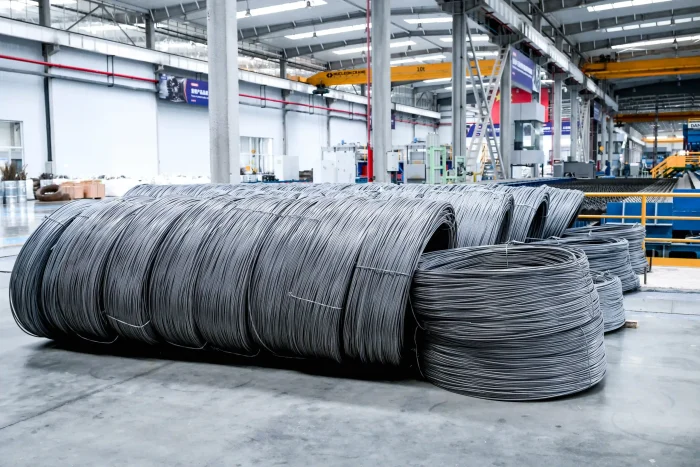
Titanium wire is supplied by grade, diameter, condition, surface, coil or straight length format, and inspection requirement. The correct grade depends on ductility, strength, corrosion resistance, and downstream forming or welding route.

Sourcing data for titanium wire.
| Typical forms | Spool, coil, straight wire, cut length |
|---|---|
| Diameter range | 0.1-6.0 mm typical request range |
| Length / package | Spool, coil, bundle, or custom cut |
| Common grades | Gr1, Gr2, Gr4, Gr5, Gr12, Gr23 |
| Reference standards | ASTM F67, ASTM F136, AMS 4951, AMS 4954, AMS 4956 when specified |
| Condition | Annealed, cold-worked, or project-defined condition |
Select the grade for the service conditions.
Use these as selection starting points. Final choice depends on the drawing, governing specification, service conditions, and qualification requirements.
| Grade | Typical selection logic | Confirm before quotation |
|---|---|---|
| Grade 1 | Commercially pure titanium for applications that prioritize ductility, formability, and corrosion resistance. | Product form, condition, dimensions, fabrication route, and governing specification. |
| Grade 2 | General-purpose commercially pure titanium balancing strength, formability, and corrosion resistance. | Service environment, product form, dimensions, tolerances, and inspection scope. |
| Grade 4 | Higher-strength commercially pure titanium where CP chemistry is required. | Strength requirement, condition, forming demand, and applicable product standard. |
| Grade 5 | Ti-6Al-4V for higher-strength structural, formed, or machined components. | Product specification, condition, testing, and downstream processing requirements. |
| Grade 12 | Corrosion-focused titanium alloy considered for defined chemical-service environments. | Process media, concentration, temperature, fabrication route, and corrosion-design basis. |
| Grade 23 | Ti-6Al-4V ELI for programs with tighter interstitial or sector-specific requirements. | Exact standard, condition, qualification documents, traceability, and end-use requirements. |
Three items to prevent specification gaps.
Confirm dimensions together with grade, condition, tolerances, quantity, and inspection scope.
Diameter and delivery form
State finished diameter, tolerance, quantity, coil, spool, straight length, or cut-piece format, and any straightness or cast requirements.
Temper and surface
Specify annealed, cold-worked, or project-defined condition, surface finish, cleanliness, lubricants, and downstream forming, welding, or mesh requirements.
Package and documents
Define spool or coil dimensions, unit weight, governing standard, certificate type, heat or lot traceability, testing, marking, and export packing.
Match wire supply to the application.
End use determines the grade, condition, dimensional control, surface preparation, testing, traceability, and downstream fabrication route.
Chemical processing
Grade and fabrication route depend on the process media, concentration, temperature, pressure, joint design, and corrosion allowance.
Review application detailsAerospace and lightweight structures
The drawing, specification, condition, inspection class, traceability, and downstream processing route determine whether the proposed product form is suitable.
Review application detailsMedical and precision parts
Exact alloy, product standard, condition, cleanliness, traceability, and qualification requirements must be stated for regulated or precision programs.
Review application detailsHydrogen and electrochemical systems
Material grade, dimensions, surface, cleanliness, joining route, electrical function, and operating environment must be reviewed together.
Review application detailsDefine inspection and documentation before production.
Align document requirements with the production lot, inspection plan, marking, and final records.
- Material identity and heat or lot traceability aligned with the delivered spools, coils, straight lengths, or cut pieces when required
- Chemical and mechanical results checked against the specified product standard when required
- Diameter, tolerance, surface, delivery form, spool or coil format, and unit-weight checks agreed for the order
- Certificate type, additional testing, marking, contamination control, and packing confirmed before order release
Frequently asked questions about titanium wire.
What titanium wire grades and diameters do you supply?
Gr1, Gr2, Gr4, Gr5, Gr12, and Gr23, from 0.1 mm to 6.0 mm, in coil, spool, or straight length.
Which standards cover titanium wire?
ASTM F67, ASTM F136, AMS 4951, AMS 4954, and AMS 4956 when specified.
Is titanium wire used in medical devices?
Yes. Titanium wire is used for medical devices, orthodontic and surgical components, and implant-related programs.
Custom processing around the drawing.
Send target dimensions, tolerances, surface, package format, and inspection requirements so the production route can be reviewed before quotation.
Wire drawing → Intermediate annealing → Final annealing → Surface cleaning → Spooling → Inspection
Wire drawing → Annealing → Straightening → Cut-to-length → Surface cleaning → Inspection
Send enough detail for a technical review.
Mark unknown items for discussion. This separates confirmed requirements from points requiring engineering or procurement review.
- Grade or alloy designation
- Governing standard and revision
- Diameter, tolerance, and delivery form
- Condition, surface, cleanliness, and straightness requirements
- Quantity, spool or coil format, and unit weight
- Straightening, cutting, forming, welding, or mesh requirements
- Inspection, testing, certificate, and traceability scope
- Packing, marking, destination, and requested delivery window
Related material pages.
Use these links to compare adjacent product forms and materials without returning to the full product directory.
Send a titanium wire requirement.
Include grade, standard, dimensions, tolerance, condition, surface, quantity, destination, and required documents. A drawing or previous specification helps us respond faster.